
In short: a cast wheel is poured, a flow-formed wheel is a cast wheel with a stretched barrel, and a forged wheel is pressed from a solid aluminum billet and then machined. Forging allows a dense, strong wheel that can be made lighter. You pay for the process, the machining time and the design freedom, not for a logo.
How the three types are made
Cast. Molten aluminum goes into a mold and cools into shape. Tire Rack notes that low-pressure casting is the most common process approved for wheels sold to car makers, and that it gives good value with solid strength. Gravity casting is simpler and cheaper, and the wheel is often heavier to reach the required strength.
Flow-formed (also called spun-rim or rim-rolled). The wheel starts as a low-pressure casting. A machine spins it, heats the outer part and presses rollers against the barrel to pull it to its final width. The barrel ends up with strength closer to a forged wheel, at a lower cost than full forging.
Forged. A solid billet of aluminum is pressed between dies under very high pressure. Tire Rack describes the result as very dense, very strong and therefore able to be very light. CNC mills then cut the spokes, the bolt holes and the finish detail.
Side by side
| Cast | Flow-formed | Forged | |
|---|---|---|---|
| Starting point | Molten aluminum in a mold | Cast wheel, barrel rolled | Solid aluminum billet |
| Typical weight | Heaviest of the three | In between | Lightest for the same strength |
| Design freedom | Limited by the mold | Limited by the mold | Set by CNC machining, so custom specs are easier |
| Price | Lowest | Middle | Highest |
What the extra money buys
Lower weight for the same strength
Because the metal is dense, a forged wheel can use less of it. Less weight at the wheel is unsprung weight, and lower unsprung weight lets the suspension follow the road more easily. Discount Tire lists better ride quality, suspension response and handling as the benefit. How much you feel depends on the car, the tires and how you drive, so be careful with any seller who gives you an exact percentage.
Machined to your specification
A cast wheel is limited by its mold. A forged wheel is cut from a blank, so width, offset and spoke design can be changed in the program rather than in the tooling. This is why custom forged wheels exist as a category.
Low-volume production
Tire Rack points out that tooling, equipment and development make forged wheels expensive in the aftermarket. Part of the price is simply that fewer are made.
When cast or flow-formed is the sensible choice
If you drive a daily car, want a stock look and have a fixed budget, a good cast or flow-formed wheel from a known maker is a reasonable purchase. Forged makes more sense when you want a specific size, width or offset that catalog wheels do not offer, when weight matters to you, or when the wheel is part of how you want the car to look.
What IQS builds
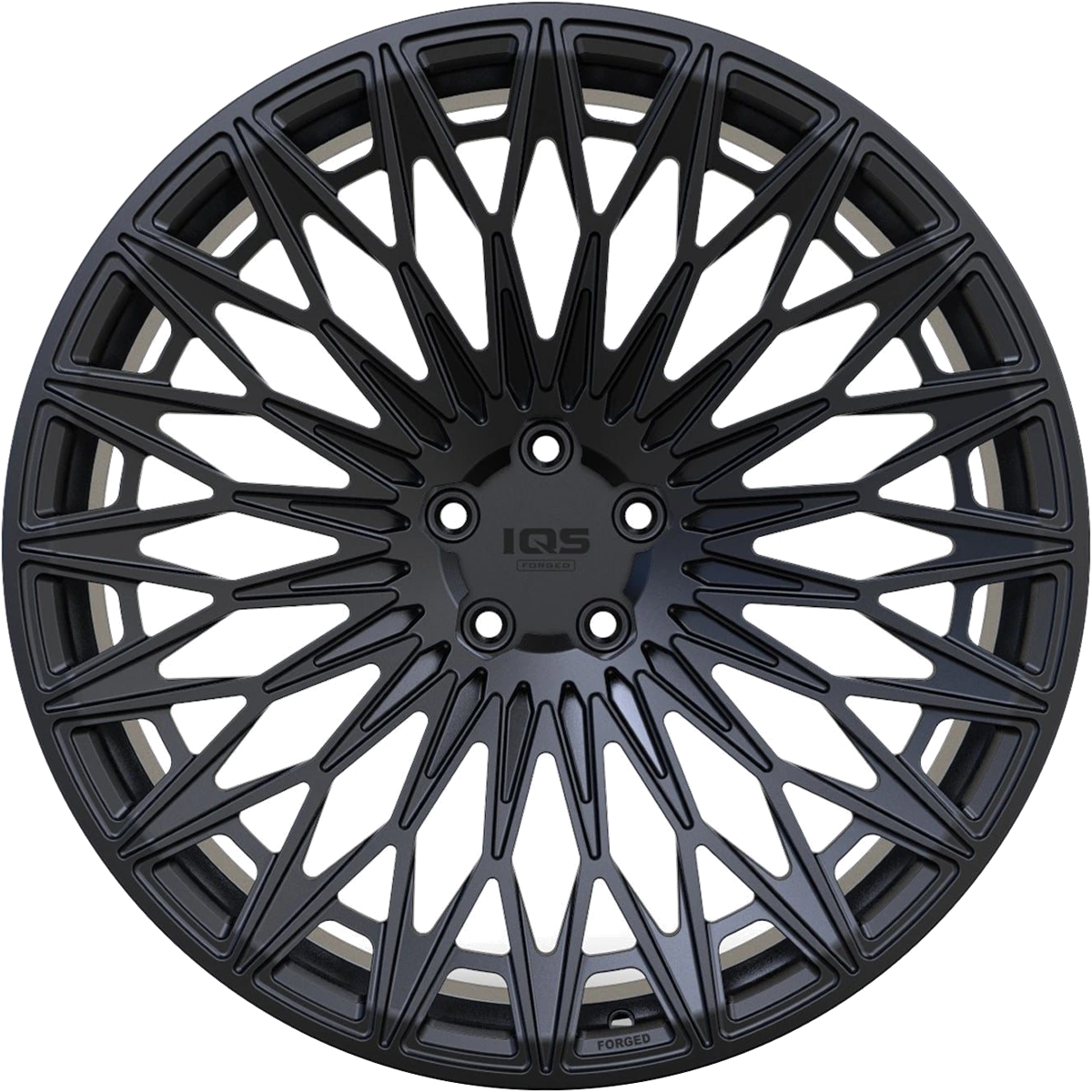
IQS Wheels makes forged wheels only, from 6061-T6 aluminum, CNC-machined. There are 22 designs in the catalog, in monoblock and 2-piece construction, from 16 to 26 inches. Pricing starts at $989 per wheel. You can see a design on your own car in the AI Try-On before you order, and the 3D render has to be approved by you before production starts.
Questions to ask any wheel seller
- Is this wheel cast, flow-formed or forged? Ask for the construction in writing.
- Which alloy and what heat treatment?
- Who checks the fitment for my exact car, and how?
- What is the warranty and what does it cover?
- What is the full price, delivered, with taxes?
Not sure how forged compares for your car? Read our guide on monoblock vs 2-piece construction next.
Common questions
Are forged wheels always lighter?
Not automatically. Forging lets a maker use less metal for the same strength, but the real weight depends on the design, the diameter and the width. When you compare, look at published weights for the same size and the same design type.
Is flow-formed the same as forged?
No. A flow-formed wheel starts as a casting and only the barrel is rolled. It can be a good middle option, but it is a different product from a wheel forged from a solid billet, and it should be described that way.
Does a forged wheel need special care?
The basics are the same as for any wheel: fit it to the right hub, torque the lug nuts to the vehicle maker's specification, and have the tires mounted by a shop that handles custom wheels carefully.
Next step
Pick a design in the IQS catalog, try it on your car, then check fitment or start a custom order. Your fitment is checked by VIN before anything is made.
Upload a side photo and compare before and after in about a minute.
Try on your car