
In short: five numbers decide whether a wheel fits: bolt pattern, center bore, diameter, width and offset. Bolt pattern and center bore must match your hub. Diameter, width and offset decide whether the wheel clears the brakes, suspension and fenders. When in doubt, have fitment checked for your exact vehicle before ordering.
The numbers, one at a time
| Term | What it is | Example |
|---|---|---|
| Bolt pattern (PCD) | Number of bolt holes and the diameter of the circle they sit on, in millimeters | 5x112 is five holes on a 112 mm circle |
| Center bore | The hole in the middle of the wheel that sits over the hub | Must be at least as large as the hub |
| Diameter | Size of the wheel across the tire seat, in inches | 19 inch |
| Width | Distance between the inner and outer tire seats, in inches | 8.5 inch |
| Offset (ET) | Distance from the mounting surface to the wheel centerline, in millimeters | ET35 is +35 mm |
| Backspacing | Distance from the mounting surface to the back edge, in inches | Older way to describe the same thing |
Bolt pattern
The bolt pattern is written as a number of bolts times a circle diameter, such as 5x112 or 5x120. Both parts must match your car exactly. A wheel that is close but not the same is not safe to use. Discount Tire describes the bolt pattern as one of the first things to confirm when you shop for wheels. Your owner's manual, the existing wheels and a fitment lookup all list it.
Center bore
The center bore is the opening that sits over the hub on the car. It should fit the hub snugly. If a wheel's bore is larger than the hub, hub-centric rings fill the gap. If it is smaller, the wheel will not seat on the hub. This is a check we do on every order.
Offset
Offset is the distance from the wheel's mounting surface to the centerline of the wheel. Tire Rack and Discount Tire both describe it in millimeters and as positive, zero or negative. A higher positive offset tucks the wheel further in toward the car. A lower or negative offset pushes it out toward or past the fender.
A practical example. A 19x8.5 wheel at ET35 compared with the same wheel at ET20 sits 15 mm further out. That small change can decide whether the tire touches the fender or the suspension.
Width
A wider wheel adds width on both sides of the centerline. A wheel one inch wider, at the same offset, extends about 12.7 mm further out and 12.7 mm further in. That is why a width change usually needs an offset change as well. The tire must also suit the rim width, and tire makers publish the approved range for each tire size.
Diameter and tire size
Larger wheels need lower-profile tires if you want to keep the overall tire diameter close to the original. Tire Rack publishes a tire size calculator for comparing the result. Keep the overall diameter close to stock so that the speedometer and driver-assist systems still read correctly. Also check that the wheel clears your brake calipers, which is why bigger brakes can limit the smallest wheel diameter you can use.
Where to find your numbers
- Offset and width are usually stamped on the back of the wheel. Discount Tire notes this for offset.
- The tire sidewall shows tire size, not wheel offset.
- The owner's manual and your dealer list the bolt pattern and factory wheel sizes.
- A fitment tool that works from your VIN gives the numbers for your exact trim.
How IQS handles fitment
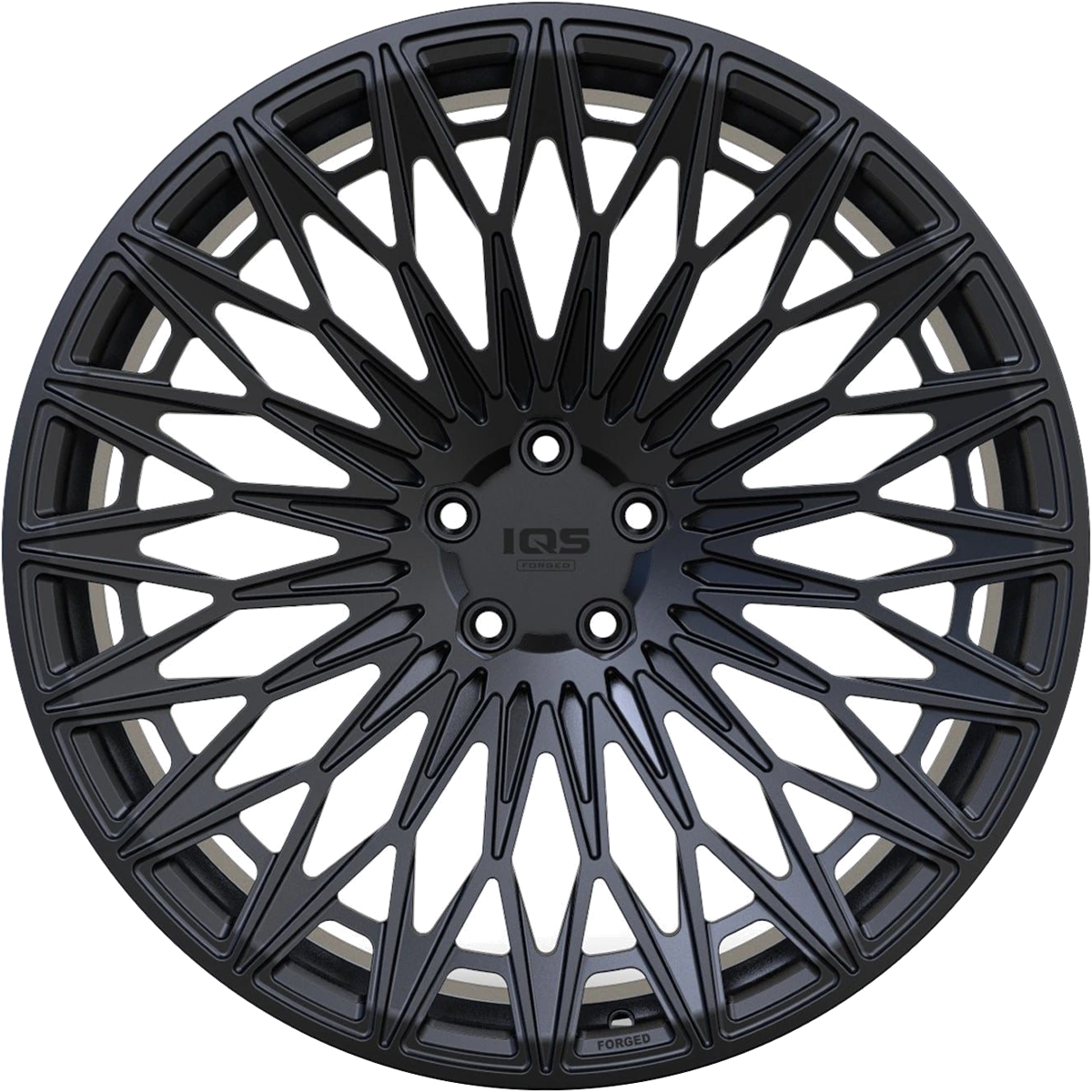
IQS checks fitment by VIN, then builds a 3D render of the wheel set on your car for you to approve before production begins. You can start with the fitment check. If you want a specific stance, describe it in the custom order. Wheels are forged 6061-T6 and CNC-machined, so width and offset are set for your car and not picked from a fixed shelf. See the 22 designs, or preview one with the AI Try-On.
A short checklist
- Bolt pattern matches exactly.
- Center bore fits the hub, or rings are used.
- Brake calipers clear the wheel.
- Offset and width keep the tire off the suspension and fender.
- Tire size keeps the overall diameter close to stock.
For how setups with different front and rear sizes work, see staggered vs square.
Upload a side photo and compare before and after in about a minute.
Try on your car